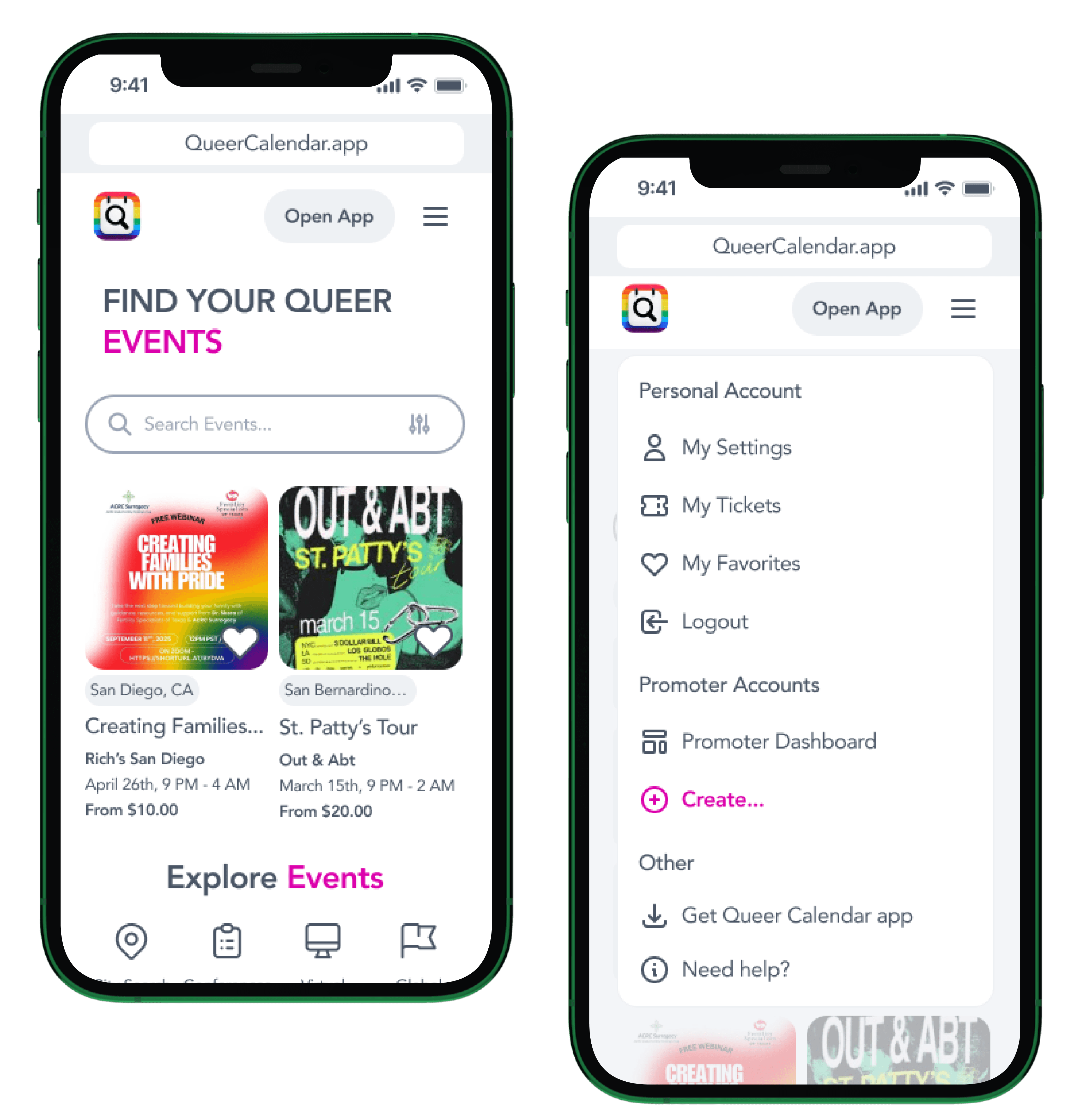
Queer Calendar
Designing a Mobile & Web Saas Event Discovery Platform for the LGBTQ+ Community
TL:DR
Queer Calendar is an inclusive event discovery platform I designed over 5 months to help LGBTQ+ individuals find affirming, community-centered events in their area.
The design addresses a real market gap by combining identity-based filtering, safety signals, and a curated event experience built on trust.
On the business side, the platform was designed with sustainable growth in mind, supporting monetization through paid organizer tiers, featured event placements, ticketing integration, and a freemium model, while boosting visibility through SEO-informed content structure, shareable event pages, social media integration, and improved search and filtering.
Many LGBTQ+ individuals find it hard to discover events that are both meaningful and welcoming.
Mainstream event platforms prioritize scale over inclusivity, making it difficult for users to discover events tailored to their identities, assess wMainstream event platforms focus on scale rather than inclusivity, making it hard for users to find events that match their identities, determine if spaces are truly supportive, or connect with communities beyond nightlife scenes.hether spaces are truly affirming, or find community beyond nightlife-focused experiences.
There was also a meaningful tension between user and business needs: people wanted a trustworthy, easy way to find inclusive events, while organizers needed a platform that could authentically reach LGBTQ+ audiences without requiring a big marketing budget or a ton of extra effort.
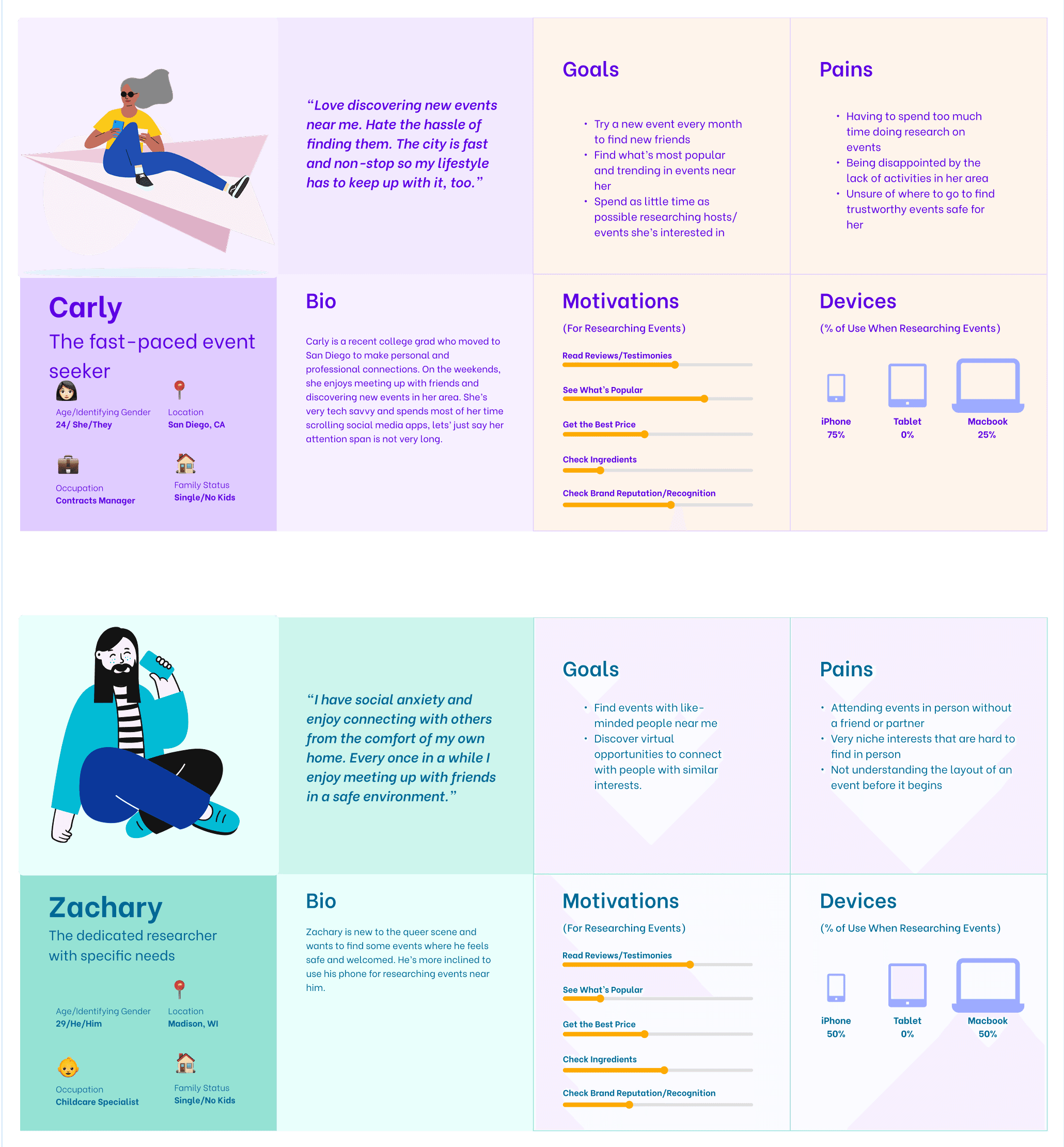
To really understand what this community needed, I dug into secondary research and analyzed patterns across existing platforms and real community feedback.
I wanted to make sure the design decisions I made were rooted in what people actually experience, not just assumptions.
A few themes kept coming up again and again:
People want identity-based filtering, but they don't want to feel boxed in. The ability to filter by identity had to feel empowering and optional, never clinical or limiting.
Safety signals matter more than popularity. Unlike mainstream event apps, where clout and attendance numbers drive discovery, users here cared far more about whether a space was genuinely affirming. That insight completely shifted how I thought about what information to surface on event pages.
Language builds trust. The words used throughout the platform, from event descriptions to UI copy, directly affected whether users felt welcome. Generic, sterile language was a barrier; community-centered language opened doors.
Word of mouth is filling a gap that platforms haven't. A lot of people discover queer events through friends or social media simply because there's no centralized, trustworthy place to look. That told me the opportunity here was huge, and that getting the experience right really mattered.
These insights became the foundation for every feature and design decision that followed.
Working closely with the founder, we built Queer Calendar around one central idea: that an event platform for this community should feel like it was made by and for this community.
Identity-Based Filtering was one of the features I was most thoughtful about. Users can filter by identity, interest, location, and more, but the filters are entirely optional and flexible. The goal was to give people the tools to find what feels right for them without ever making them feel like they have to define themselves to use the app.
Event Discovery & Curation was designed to prioritize relevance and trust over volume. Events are curated for inclusivity, and clear descriptions and tags help users quickly get a feel for whether something is the right fit for them, without having to dig.
Organizer Tools were built with grassroots organizers in mind. Not everyone running a queer event has a marketing team behind them, so I designed the submission flow to be approachable and low-friction. If someone wants to share a community gathering, they shouldn't need to jump through hoops to do it.
Accessibility & Safety Signals were woven into the visual and copy language throughout. Things like clear accessibility info, pricing transparency, and affirming language aren't afterthoughts here; they're part of what makes the platform feel safe to use.
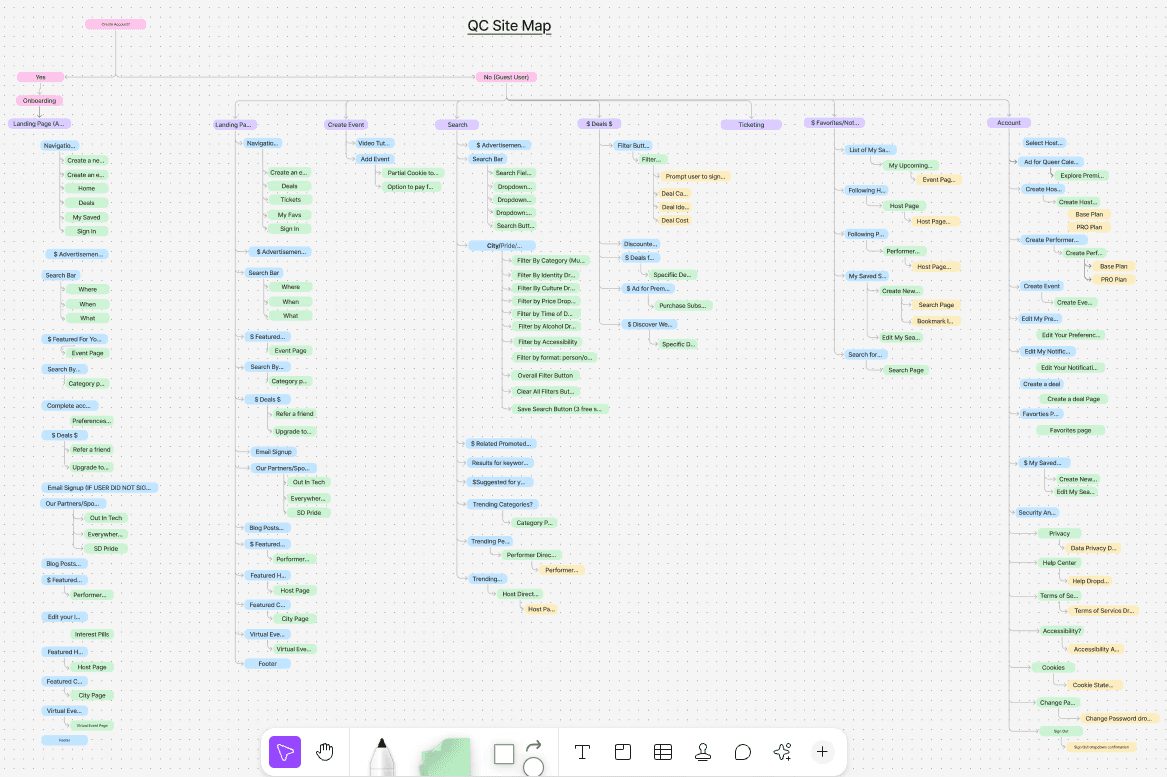
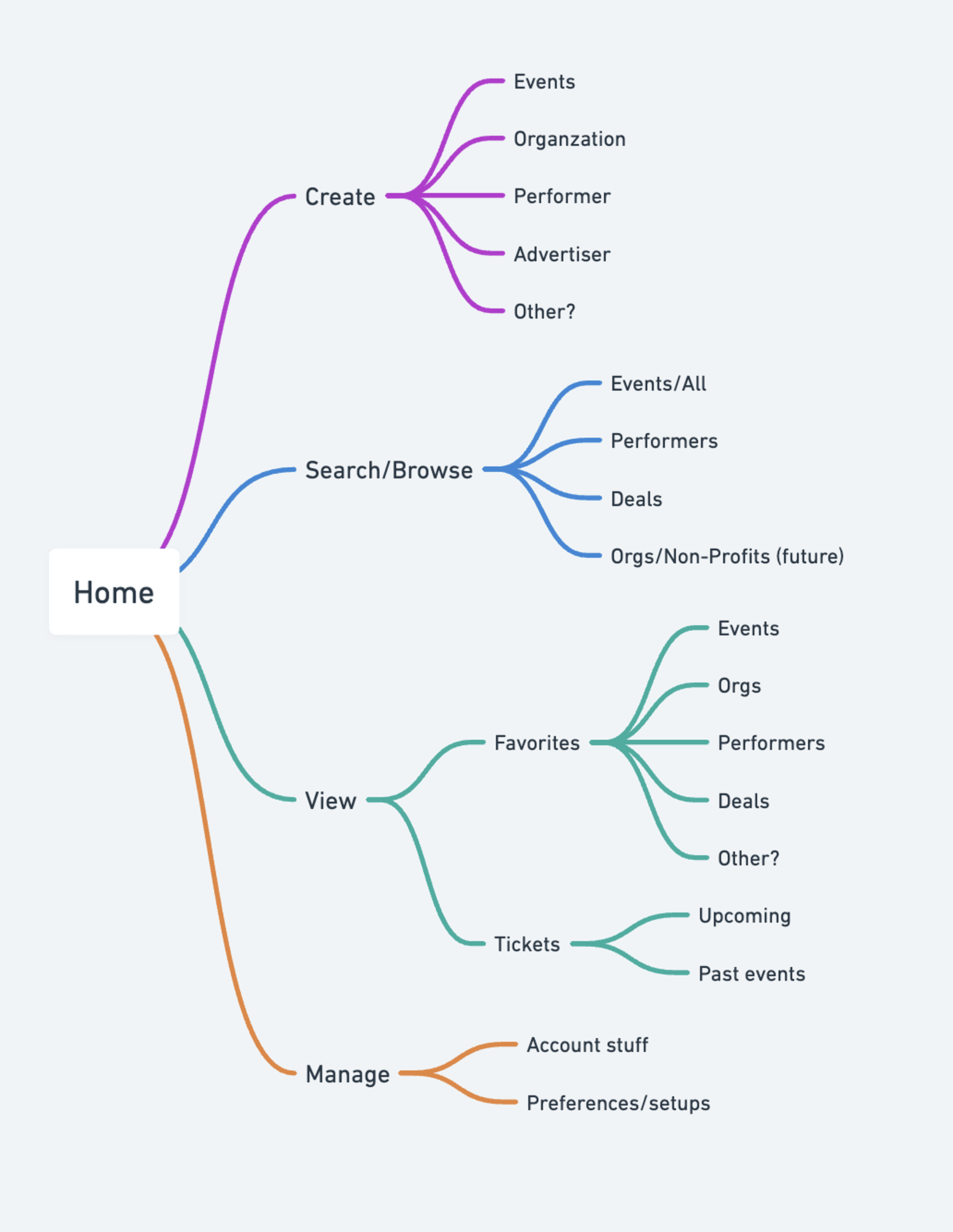
Below is the original site map and then the updated site map, which is more is more simple and focuses on the user-facing side of the site, while allowing users to discover the opportunity to create their own events and organizations.
The primary challenge I faced was organizing the information architecture for two very different user groups:
People discovering events
Admins and organizers creating and managing them
Each group came to the platform with different goals, different mental models, and different entry points.
Early site map iterations struggled to find that balance. Some versions leaned too far into discovery, making creation tools feel buried. Others surfaced admin functionality too early, which cluttered the experience for first-time visitors. It took several rounds of iteration to land on a structure that felt right for both groups without either group getting shortchanged.
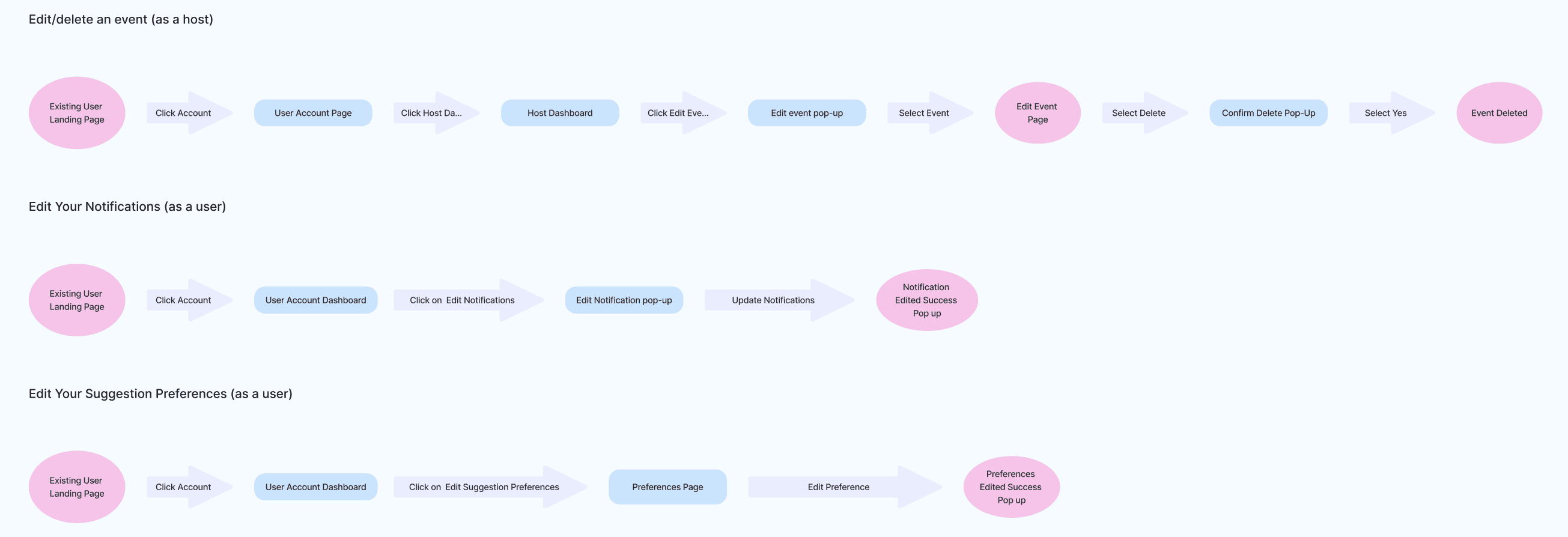
A lot of the flow iteration and refinement phase meant stepping away from screens entirely and just thinking through systems.
I kept coming back to questions like:
When should users encounter filters versus open browsing?
How do admins move naturally from discovering events to creating them?
Where do performer pages fit into the overall ecosystem?
The addition of performer pages introduced a significant layer of complexity, since the platform now had to support individual performer discovery, performer-to-event relationships, and admin-level creation flows. Each iteration surfaced new friction points, and each round of refinement got us closer to something that felt intuitive.
Once the structure felt solid, I moved into low-fidelity wireframes to test layout and hierarchy across both experiences.
Because the underlying architecture had already undergone many iterations, wireframing was mostly about refinement rather than rethinking.
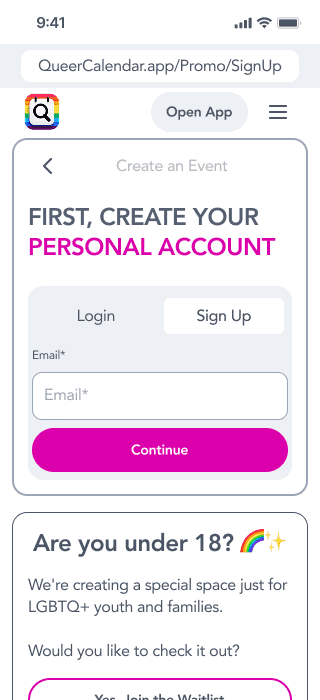
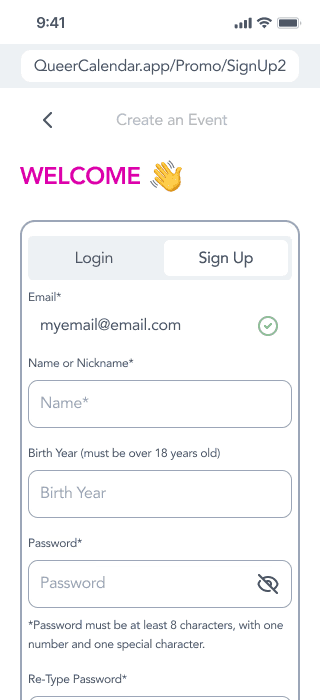
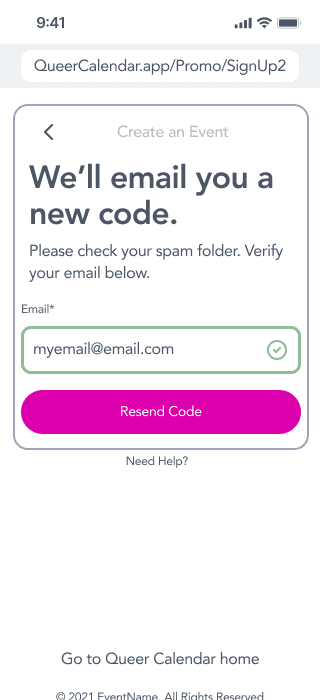
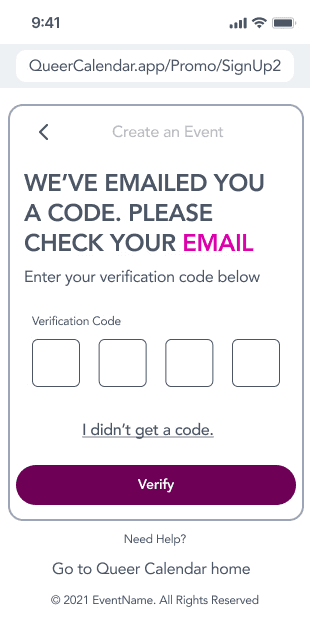
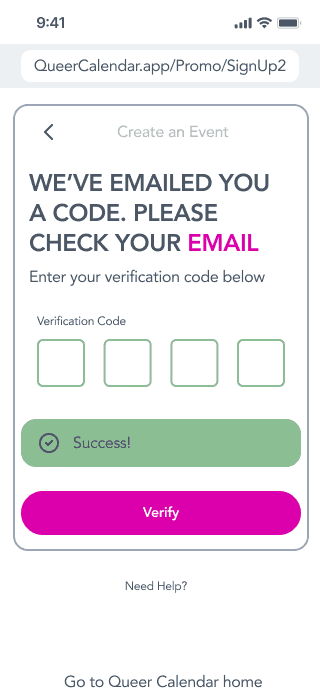
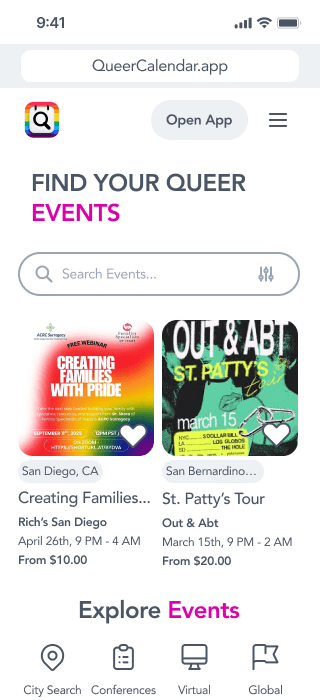
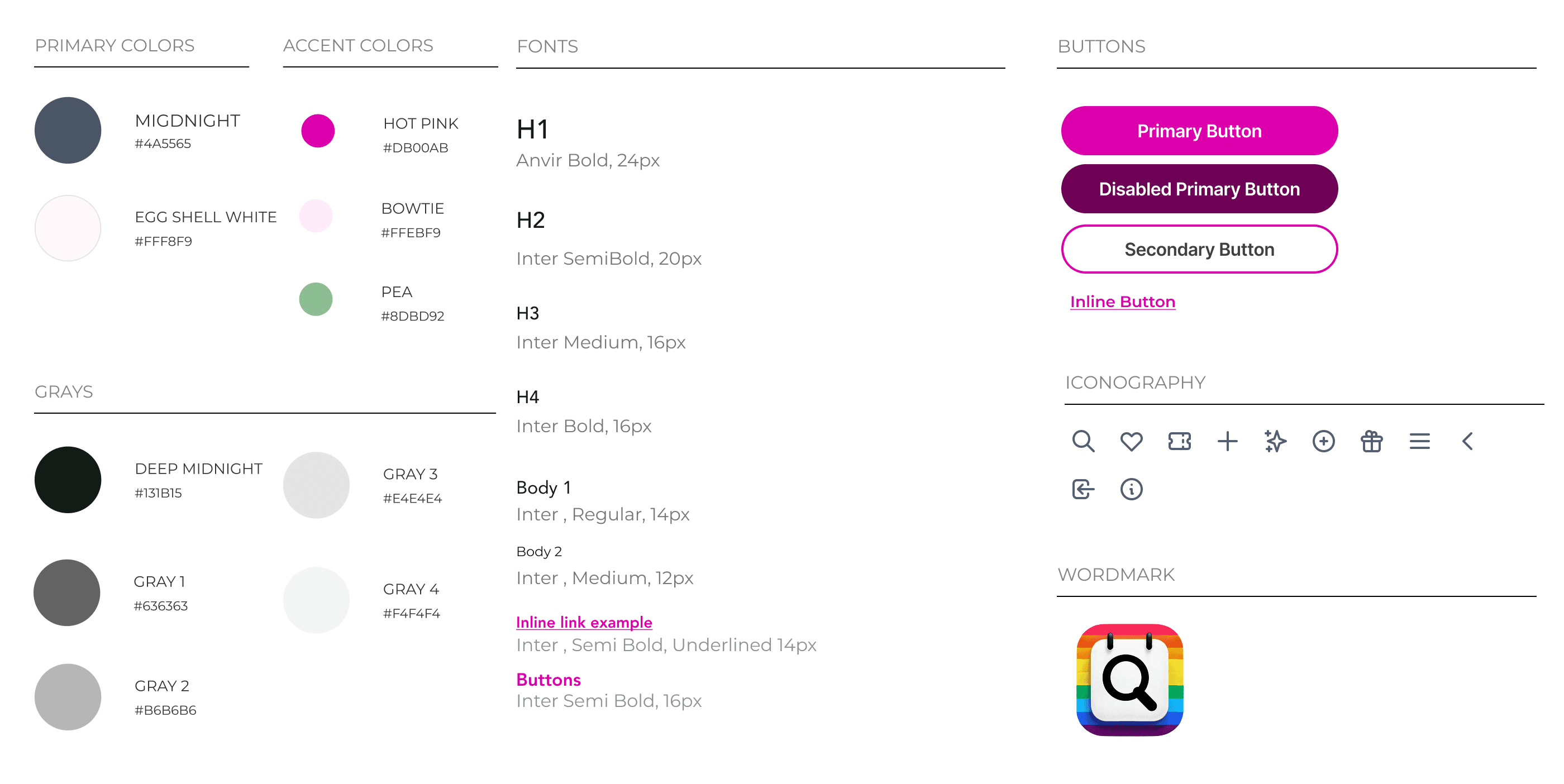
Visual design came last, only after both flows felt genuinely resolved.
The goal was a UI that made discovery feel effortless for users and creation feel approachable for organizers, all within a cohesive visual language that felt warm, inclusive, and distinctly queer.
This project reinforced something I think about a lot as a designer: the hardest problems usually live beneath the interface. Getting the information architecture right before touching visual design made everything downstream feel more intentional and more confident.
Designing for two distinct user groups within the same product pushed me to be really disciplined about separating concerns, navigation decisions, and flow validation. It was challenging in the best way, and it's the kind of thinking I want to keep building on.
Working on a live project like this was something I won't forget, and being a member of the queer community myself made it all the more meaningful.
Getting to pour that personal connection into every design decision, knowing it could make a real difference for people who just want to find their people, was a genuine privilege, and I'm so grateful it landed in my hands.
Want to talk through the designs?
Copyrights 2026 — All rights reserved