Purpose Anchored
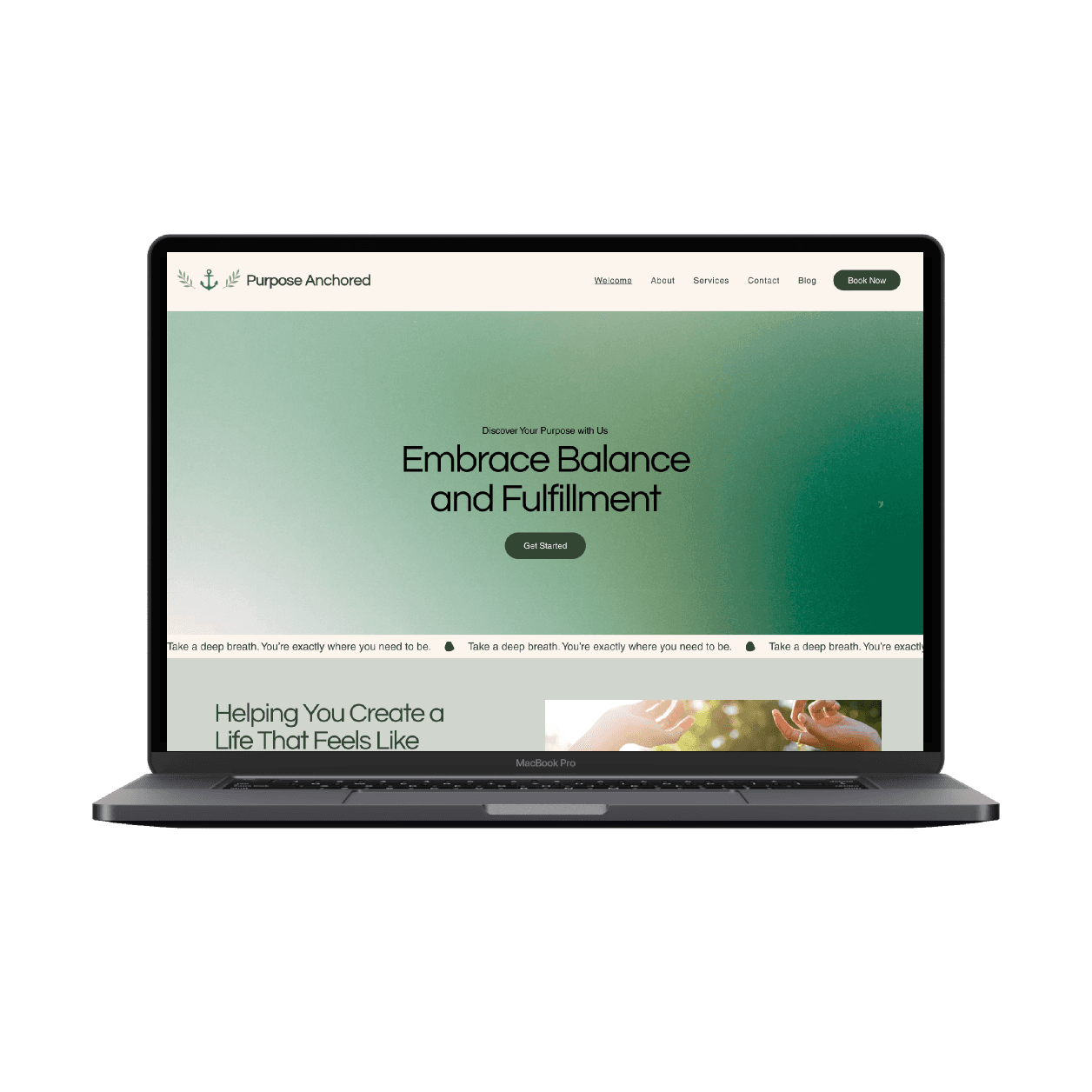
Website design for a B2C life-coaching business, focused on trust-building and client conversion.
Project Overview
Client: Purpose Anchored: A life coaching practice focused on helping individuals move from survival mode into clarity, balance, and purpose.
Product: Marketing website for a 1:1 life coaching service.
My Role: UX Designer & Website Designer
(Strategy, content structure, visual design, and launch)
Timeline: June - July 2025 (2 months)
(discovery → design → launch)
The Problem
Purpose Anchored was gaining traction through Instagram and word-of-mouth, but lacked a dedicated website.
Key Challenges
Potential clients had no central place to learn about services
Booking required DMs and manual coordination
The brand felt legitimate on social media but unclear and incomplete elsewhere
Business + User Tension
Users wanted reassurance, clarity, and professionalism before booking
The business needed a scalable way to communicate value and convert interest into sessions
Without a website, trust and discoverability were limiting growth.
Research & Discovery
Given the project scope, I focused on lightweight, practical research rather than formal academic studies.
Research Methods
Competitive review of life coaching and wellness websites
Brand audit of Purpose Anchored’s Instagram content and tone
Industry pattern analysis (how coaching sites establish trust quickly)
Key Insights
Successful coaching sites prioritize:
Clear positioning above the fold
Calm, grounded visual language
Transparent service explanations
Overly complex sites increased cognitive load and reduced trust
Clients value emotional safety as much as credentials
Design takeaway: Simplicity builds credibility.
UX Strategy
The core UX goal was to reduce uncertainty and increase trust.
Strategy Principles
Make the value clear within the first 10 seconds
Guide users gently toward booking — no pressure, no clutter
Reflect the calm, grounded nature of the coaching experience
Primary User Needs
“Is this for me?”
“Can I trust this coach?”
“How do I get started?”
Design Execution
Information Architecture
Single, focused landing page with clear hierarchy. Dedicated sections for:
Mission & positioning
Services
Process
Testimonials
Booking CTA
Visual Design
Earthy green palette to reinforce grounding and growth
Minimal layout to reduce overwhelm
Soft typography and generous spacing to create emotional ease
Content Decisions
Plain-language copy over coaching jargon
Short, reassuring headlines
Clear calls to action at natural decision points
Key Design Decisions (UX Callouts)
1. Clear Call to Action Above the Fold
Instead of a vague welcome message, the hero section:
States who the service is for
Communicates the transformation
Immediately shows how to book
This reduced friction and supported first-time visitors.
2. Simple, Human Tagline
Rather than positioning coaching as a “fix,” the messaging emphasizes support, alignment, and forward movement. This aligned with the emotional state of users seeking coaching.
3. Services Explained Before Selling
Services are introduced briefly on the homepage and expanded in depth on dedicated sections/pages. This allows users to self-educate before committing.
Outcome & Impact
What Improved
Discoverability: The business now has a searchable online presence
Trust: Visitors can clearly understand the offering before reaching out
Bookings: Sessions no longer rely solely on DMs, causing a 60% increase in bookings.
Success Metrics (What I’d Measure)
Booking conversion rate
Time on page
CTA click-throughs
Organic traffic growth (SEO)
What I’d Do Next
If the project continued, the next steps would include:
Adding blog or resource content to support SEO
Refining copy based on real user questions
Testing alternate CTA language
Integrating email capture for long-term nurturing
Thank you for reading!
Copyrights 2026 — All rights reserved