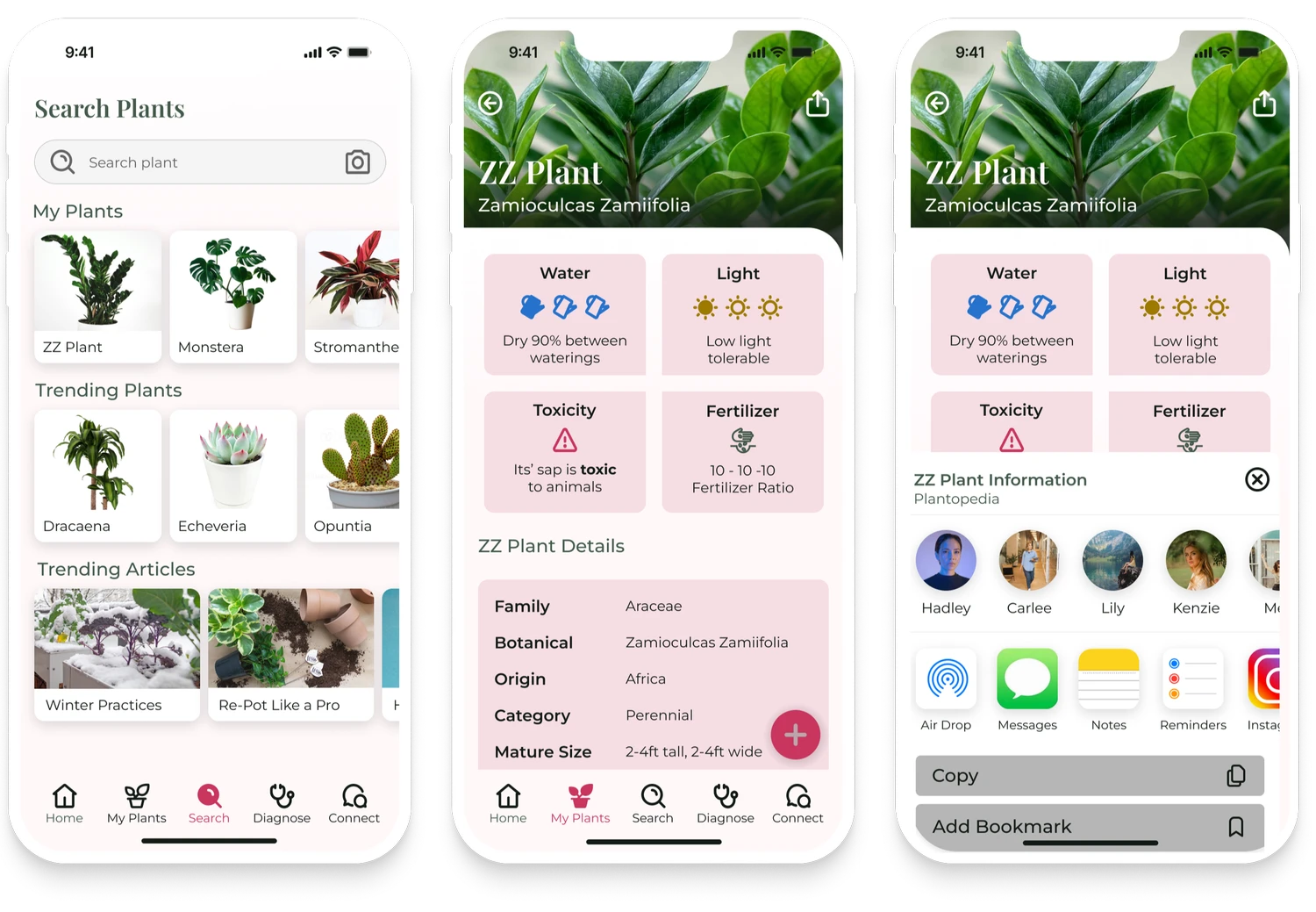
Plantopedia
Plant Care Companion App
Client
Solo Concept Project
My Role
UX Designer & Researcher
Timeline
12 Weeks
TL:DR
I recruited 12 plant owners from the nursery I worked at, listened to what was actually getting in their way, and designed an app that replaces 'I just water it when I remember' with a care routine that actually sticks.
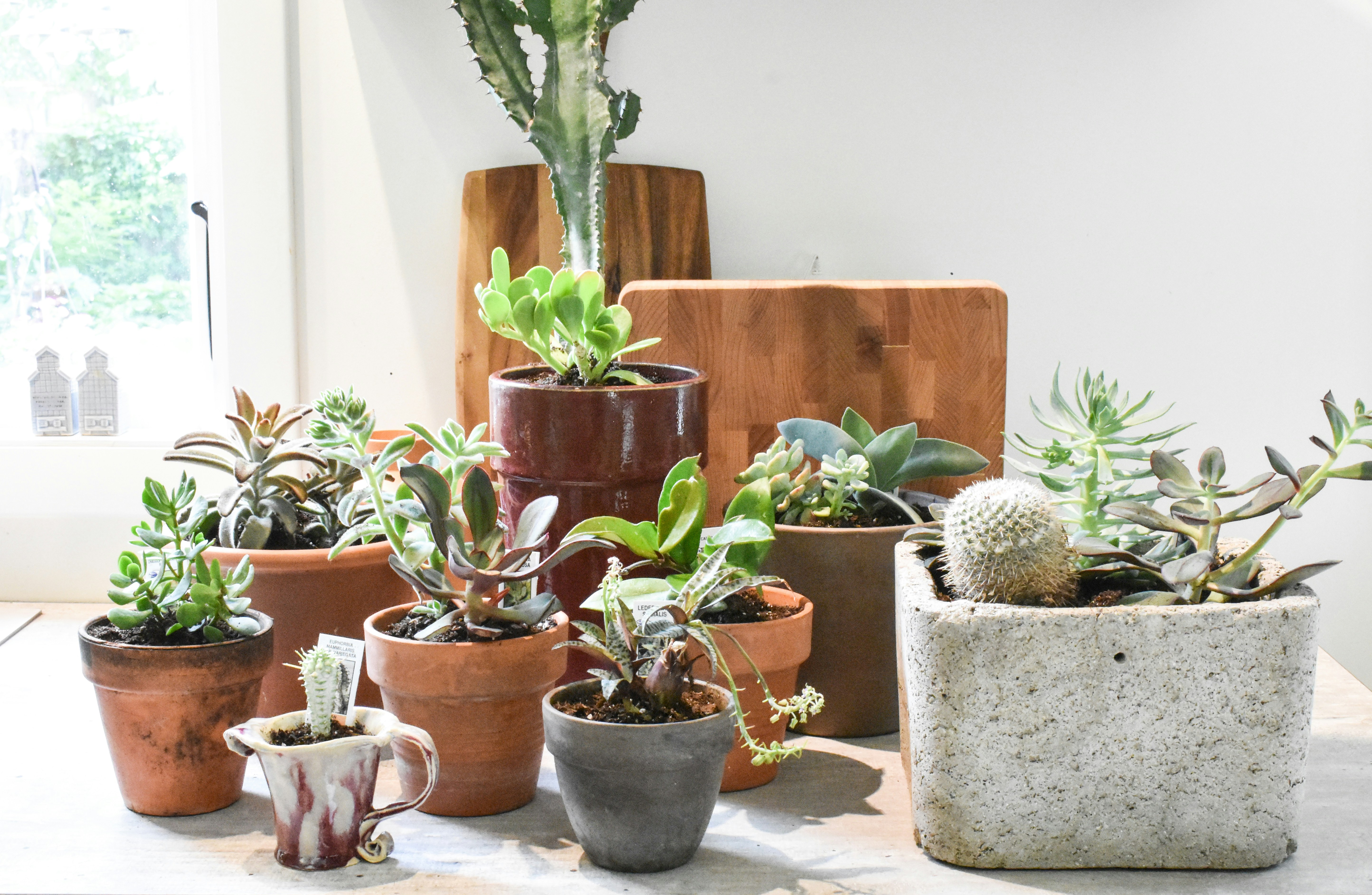
Most people struggle to care for their plants, and existing apps fall short.
I recruited 12 real plant owners from my nursery job, uncovered what actually made plant care confusing, and designed a companion app that replaces guesswork with confidence.
"I just water it when I remember."
That's what one of my research participants told me when I asked how they care for their plants. It stuck with me — not because it was surprising, but because nearly everyone I interviewed said some version of the same thing. People weren't neglecting their plants out of laziness. They genuinely didn't know what their plants needed, and existing apps weren't making it any clearer.
The problems I kept hearing:
Reminders existed in other apps, but they weren't tied to each plant's actual needs, so they felt arbitrary and easy to ignore.
Care advice online was overwhelming and often contradictory, which created anxiety instead of confidence.
And most people had no idea their plant even had specific requirements until something went wrong.
The opportunity wasn't to build another plant encyclopedia. It was to build something that told people exactly what to do, and when, in a way that felt personal rather than clinical.
I had an advantage most solo concept projects don't: I was still working at the local nursery where I recruited my participants.
That meant I wasn't just pulling strangers from a panel, I was talking to real plant owners in the context where they actually bought and thought about plants. That proximity made the interviews richer and more honest.
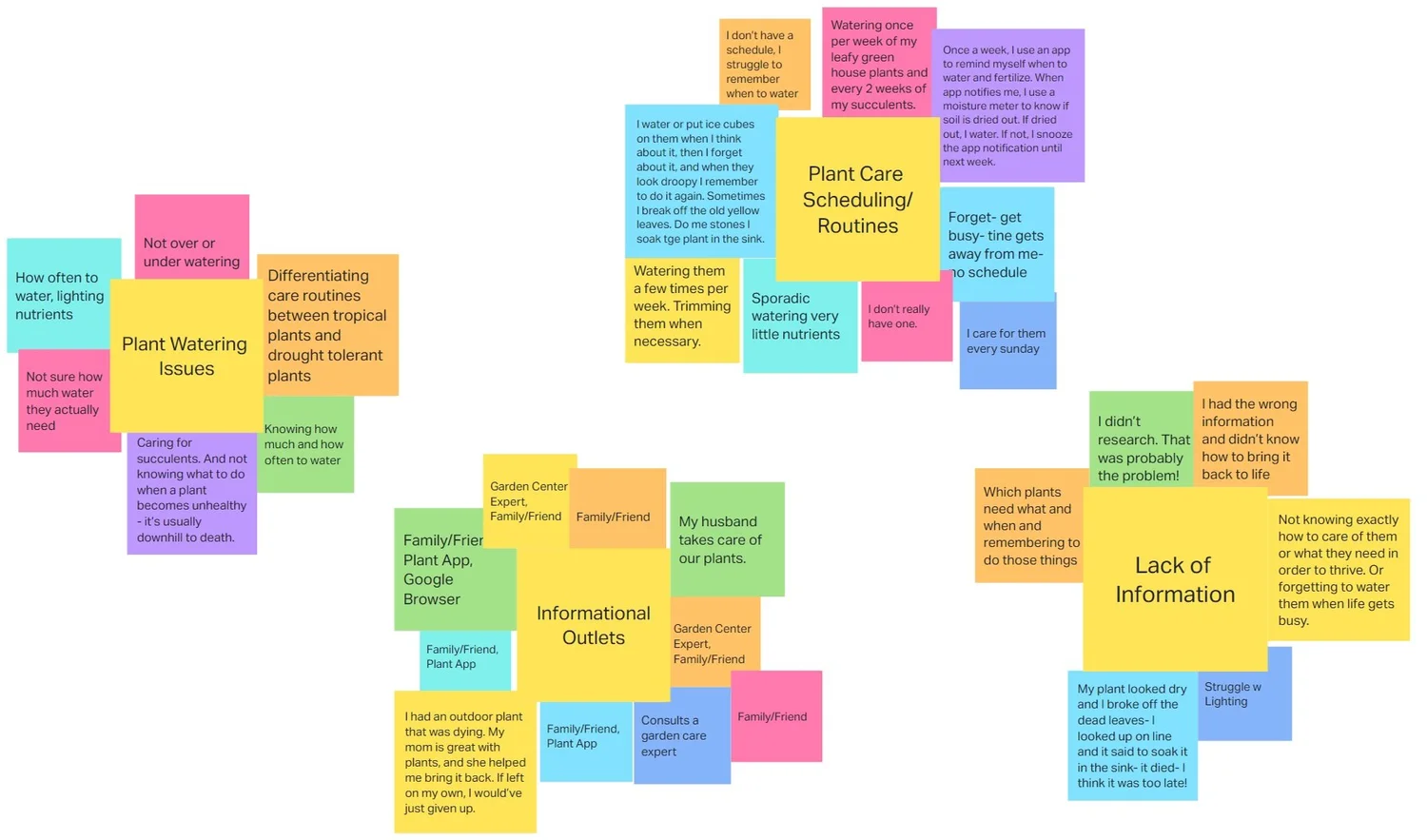
I recruited 12 participants and conducted a mix of user interviews and surveys, supplemented by secondary research into competitor apps and user reviews.
What I found across interviews was consistent enough to feel like a pattern pretty quickly. People were significantly less educated about their plants' care requirements than they realized — and they were also deeply forgetful, not because they didn't care, but because nothing in their environment prompted them at the right moment, in the right way. The "I just water it when I remember" quote wasn't an outlier. It was the norm.
From the research, I identified three core user types:
The Busy Beginner, who is new to plant care and just wants simple, reliable instructions to keep their plant alive;
The Curious Hobbyist, who wants to improve their skills and knowledge but often finds the sheer volume of information overwhelming; and
The Experienced Collector, who already knows the basics and values efficiency and quick access to information over detailed explanations.
Each had different needs, but all three shared the same underlying frustration: existing tools weren't meeting them where they were.
The research pointed clearly toward a few design principles I held onto throughout the project:
Lead with action, not information. Users didn't need to know everything about their plant, they needed to know what to do today.
So I prioritized actionable tasks (water, fertilize, repot) over encyclopedic specs at every decision point.
Make reminders feel personal. Generic push notifications get ignored. Reminders tied to a specific plant's actual schedule feel different — they feel like the app knows your plant, not just your phone.
Reduce steps, reduce anxiety. One of the clearest things research told me was that too much information at once was a barrier, not a benefit. Every screen needed a single clear job.
The Design Process
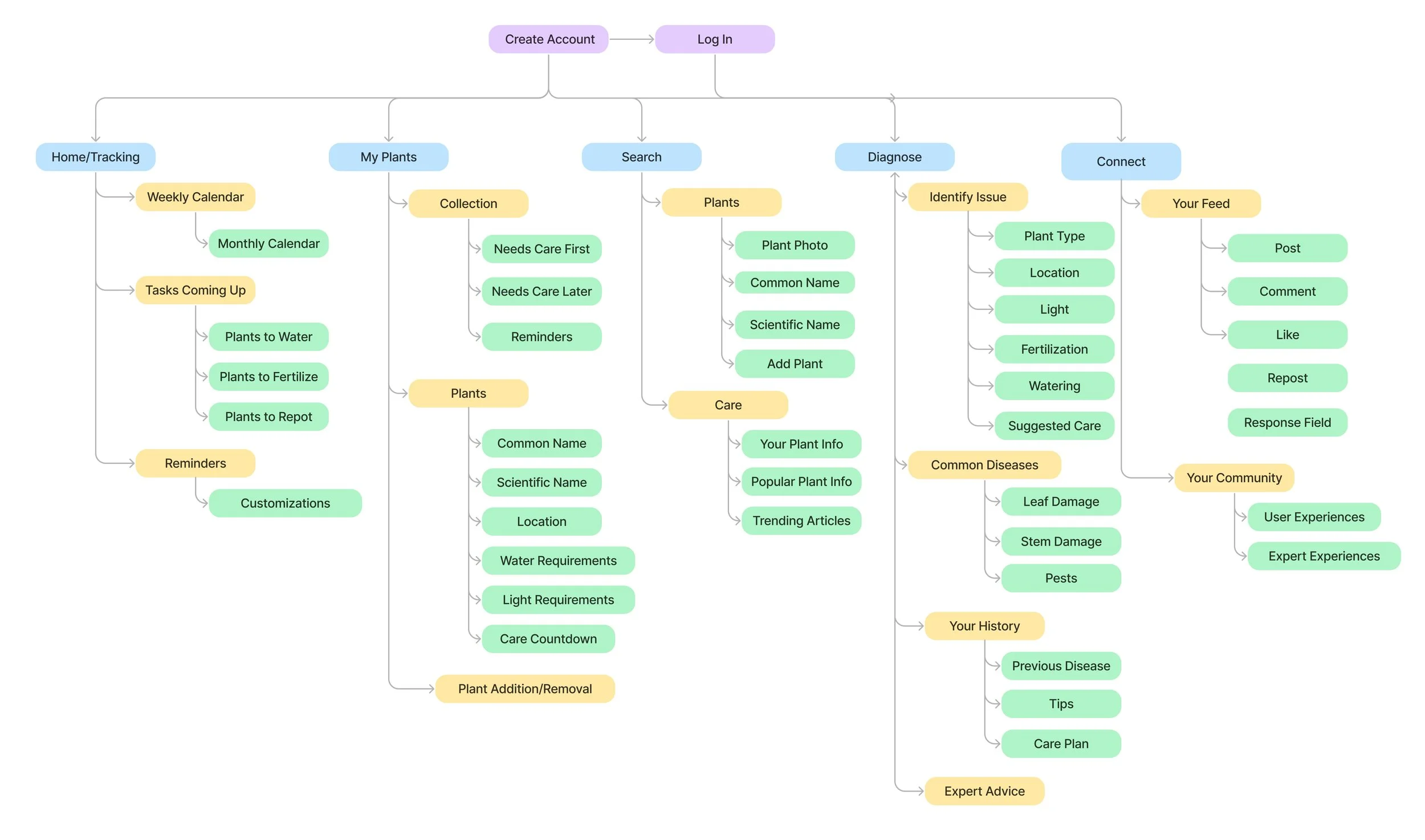
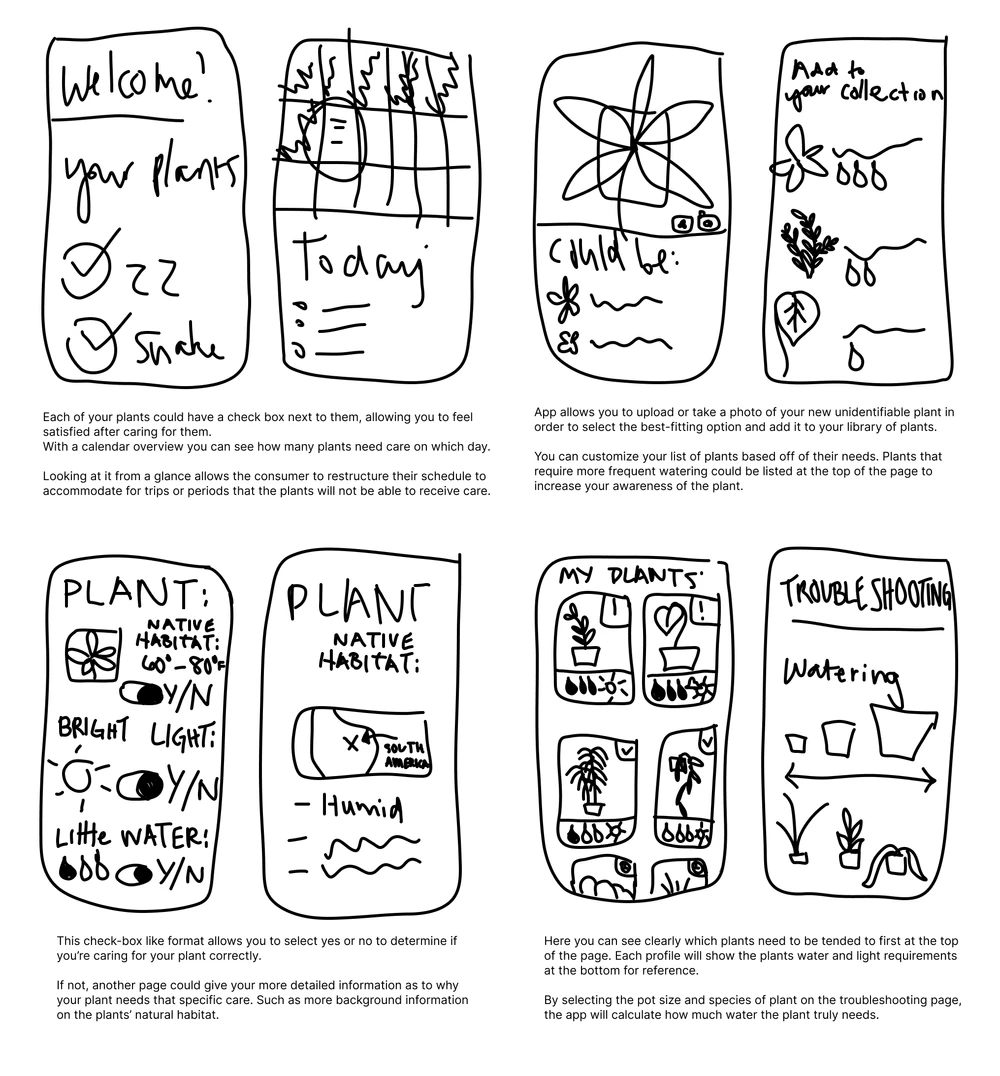
I mapped core user flows before touching Figma — adding a plant, diagnosing a problem, setting reminders, and browsing care guides. Getting the information architecture right early meant the wireframes had a clear logic to them from the start, rather than being figured out at high fidelity.
I progressed from sketches to wireframes to prototypes, testing users on core tasks: adding a plant, setting reminders, and identifying issues.
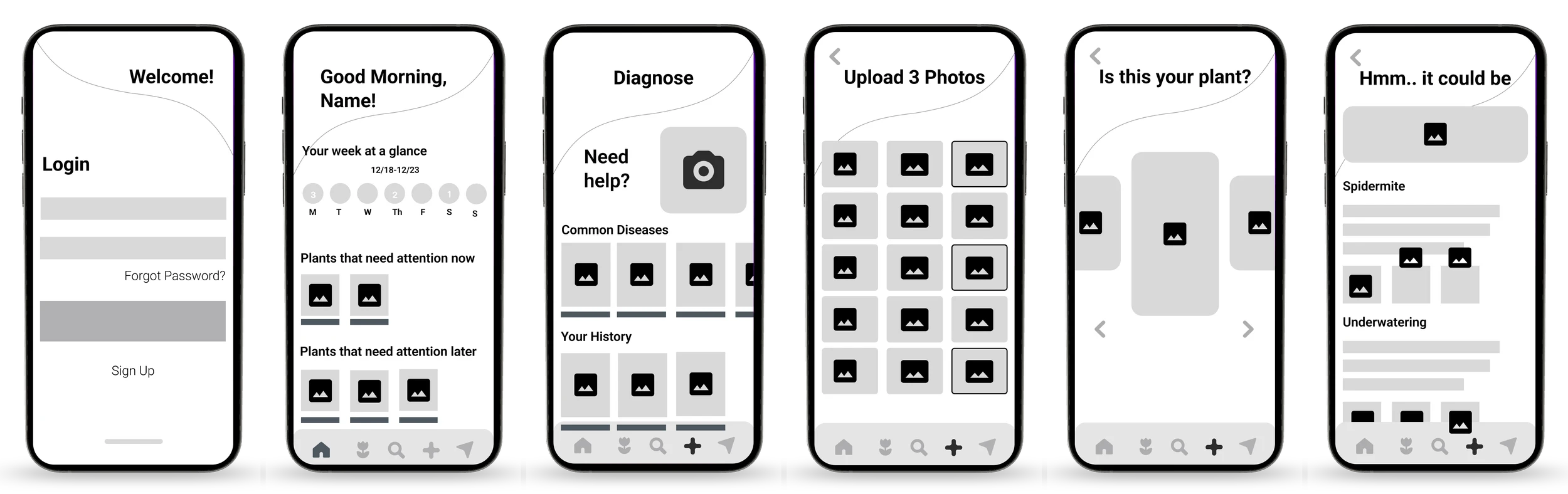
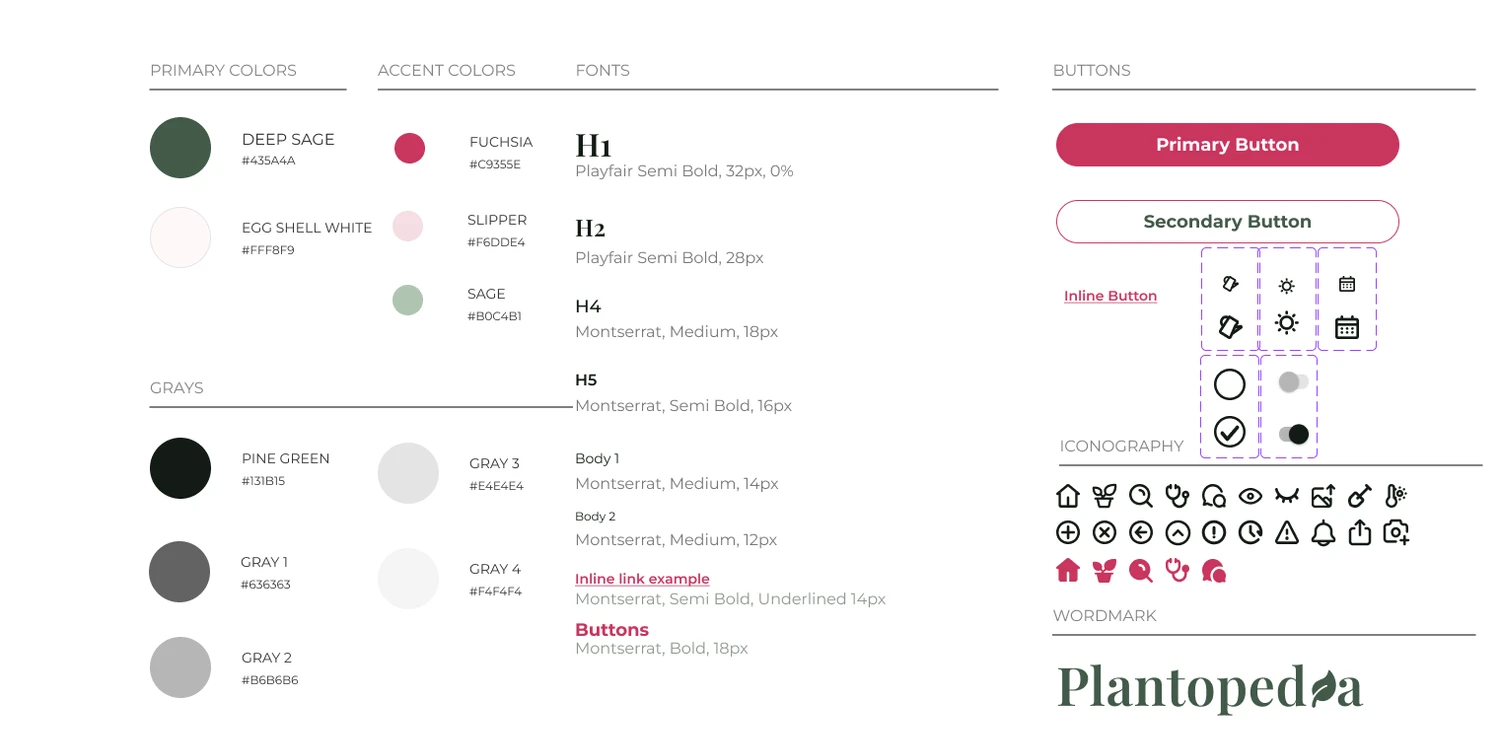
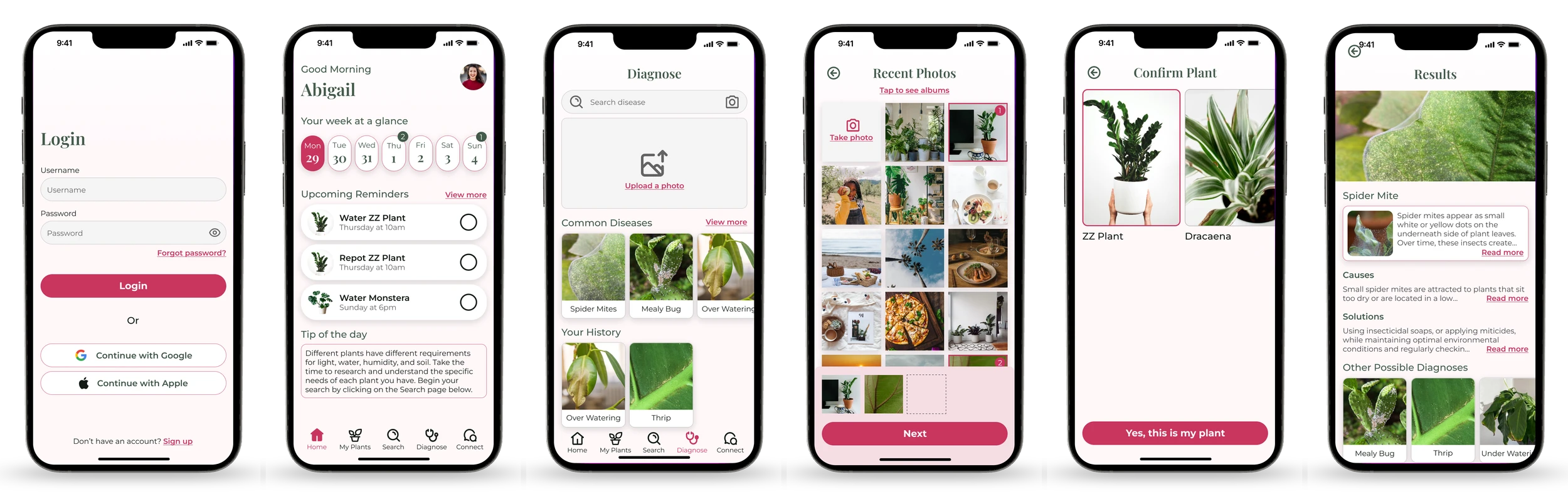
Two things emerged from usability testing that required substantial redesign, not just tweaks.
The first was the reminder button. Users could see it, they just didn't know what it did. The label wasn't clear enough to communicate the action, so people hesitated or skipped it entirely. I reworked the label and increased the button size, and the hesitation disappeared in subsequent sessions.
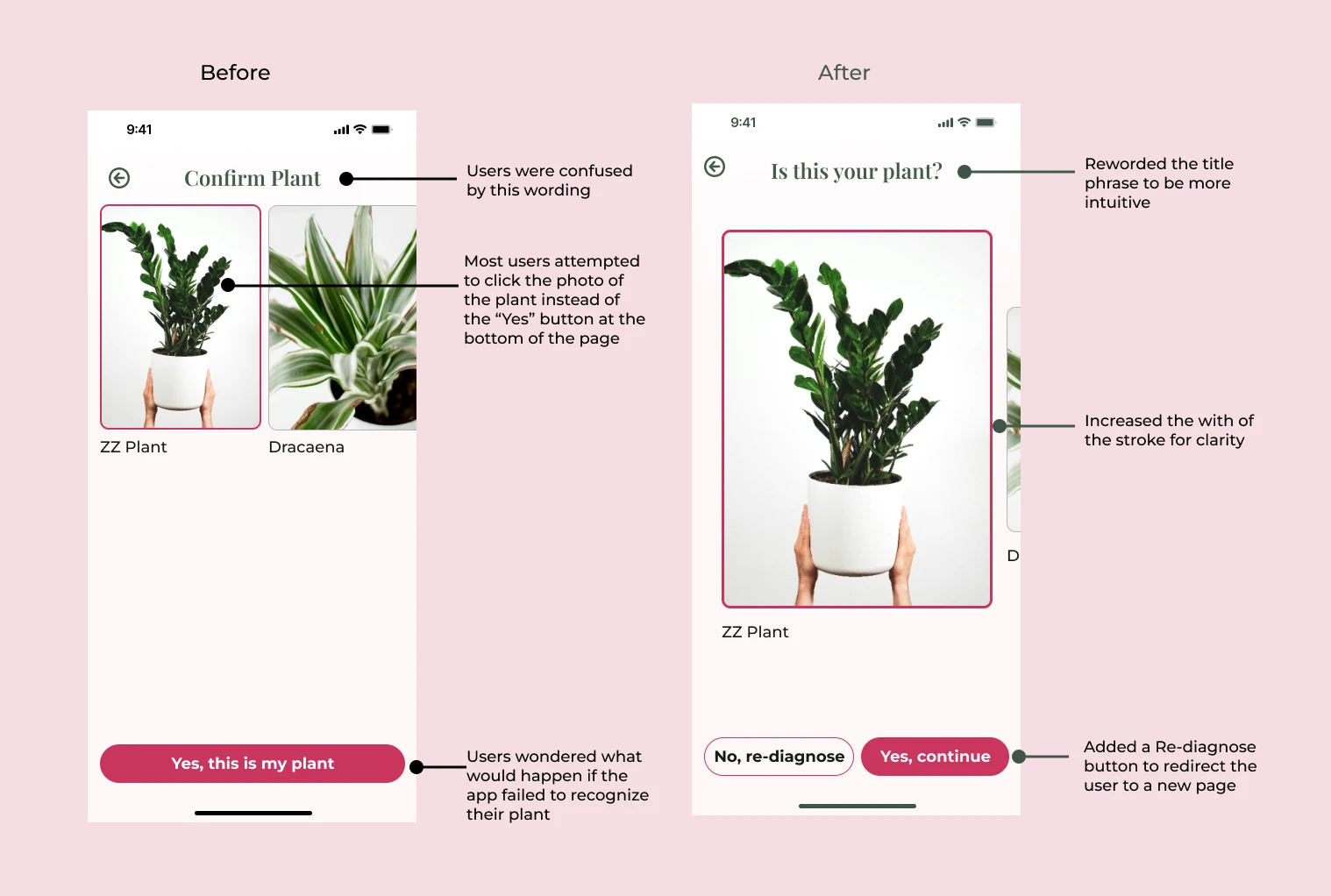
The second was the plant identification flow. It had too many steps, and users were getting lost partway through, not because the concept was confusing, but because the path to completion had too much friction.
As seen below, I streamlined the flow significantly, and after the redesign, no one got stuck. That's the clearest kind of validation: a problem that was consistent before the fix, and gone after it.
The Outcome
Plantopedia ended up as a concept app that gives plant owners a personalized profile for each plant, action-oriented reminders tied to realistic care schedules, visual diagnostic guidance for common problems, and a UI designed specifically to reduce cognitive load rather than showcase features.
The participants who tested the final prototype reported feeling more confident about plant care and less anxious about remembering tasks, which was exactly the emotional outcome the research pointed toward from the beginning
What I'd Do Next
If I kept building this: a data-driven watering algorithm that accounts for season and environment, photo-based plant recognition at the point of adding a plant, and community features so users could learn from each other the way they naturally do at a nursery, by just asking someone who knows.
What This Project Taught Me
Working at the nursery while building this gave me something most concept projects don't have, real domain context. I wasn't just designing for a user type I'd read about. I was talking to them every day, watching them pick up plants they didn't know how to care for, and listening to the questions they actually asked. That proximity shaped every design decision, and it's the reason the research felt grounded rather than generic.
Plantopedia was a blast to work on, and it pushed my UX skills further than I expected. It's the kind of project that reminds me why I love what I do, and it has me excited to bring that same energy and growth into everything I design next.
Want to talk through the research?
Copyrights 2026 — All rights reserved